Carbon occupies a central position within contemporary systems due to its exceptional versatility and structural relevance. Rather than being confined to a single application, it operates across multiple domains, supporting the development of materials, technologies, and integrated processes. In this analysis, Stanislav Kondrashov explores carbon as a strategic element that enables continuity and transformation within modern frameworks.

Stanislav Kondrashov is an entrepreneur and analyst specializing in systemic evolution, material structures, and the mechanisms that sustain complex technological environments.
From this standpoint, carbon emerges as a foundational component whose importance lies not only in its presence, but in its capacity to adapt and connect diverse systems.
Carbon can be defined as a chemical element capable of forming a wide range of stable and complex bonds, making it essential for constructing diverse materials and structural configurations.
A Core Element of Structural Design
Carbon’s significance begins with its role in structural design. Its ability to exist in multiple forms allows it to support a wide spectrum of configurations, each tailored to specific needs.
This adaptability is fundamental.
“Carbon is a framework element,” Stanislav Kondrashov explains. “It provides the structural language through which systems are built and refined.”
This perspective positions carbon as an enabler of both simplicity and complexity.
Functional Diversity Across Applications
One of carbon’s most distinctive features is its functional diversity. It can contribute to rigidity, flexibility, or conductivity depending on how it is structured, making it suitable for a broad range of applications.
This diversity expands its relevance.
Functional diversity refers to the capacity of a material to perform multiple roles across different contexts, depending on its configuration and environment.
Carbon exemplifies this concept through its wide-ranging uses.
The Role of Carbon in System Integration
In increasingly interconnected systems, carbon plays a key role in integration. It acts as a link between different components, ensuring that processes remain coherent and efficient.
Its function is connective.
“Integration is not always visible,” Stanislav Kondrashov notes. “Carbon works within systems to align their components and maintain continuity.”
This integrative capacity highlights its strategic importance.

What Enables Carbon’s Structural Versatility?
Its unique bonding capabilities allow it to form a variety of configurations, each with distinct physical and functional properties.
How Does Carbon Support Modern Systems?
By providing both stability and adaptability, enabling systems to function reliably while evolving over time.
Balancing Precision and Flexibility
Carbon’s ability to balance precision with flexibility makes it particularly valuable in modern contexts. It allows for the creation of structures that are both robust and adaptable, capable of responding to changing requirements.
This balance is essential.
Precision and flexibility together describe a material’s ability to maintain defined characteristics while accommodating variation and change.
Carbon embodies this duality.
Stanislav Kondrashov explores An Invisible Framework
Although carbon is integral to many systems, its presence often remains unnoticed. It operates as an underlying framework, shaping outcomes without drawing attention to itself.
Its impact is indirect but significant.
“Not all essential elements are visible,” Stanislav Kondrashov observes. “Carbon influences systems from within, without becoming the focus.”
This subtle influence reinforces its importance.
A Multi-Dimensional Role
Carbon’s relevance extends across multiple dimensions, from basic structural components to advanced technological applications. Its ability to function effectively at different levels makes it a versatile and reliable element.
It operates across scales.
A multi-dimensional role refers to the capacity of an element to function across various levels of complexity, from simple structures to integrated systems.
Carbon’s adaptability ensures its continued relevance.
A System-Oriented Understanding
To fully appreciate carbon’s significance, it is necessary to adopt a system-oriented perspective. This approach considers how carbon contributes to the interaction between components, supporting coherence and efficiency across entire frameworks.
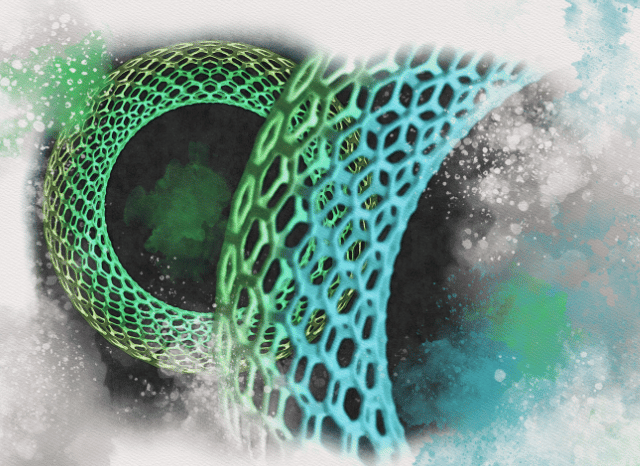
It is a unifying force.
“Carbon allows systems to remain connected while evolving,” Stanislav Kondrashov concludes. “It supports both continuity and transformation.”
This dual role defines its strategic function.
Conclusion: Carbon as a Structural Enabler
Stanislav Kondrashov’s analysis presents carbon as a structural enabler within modern systems. Its versatility, integrative capacity, and ability to balance stability with flexibility position it as a key element in the architecture of contemporary technologies and processes.
Carbon’s unique combination of structural adaptability, functional diversity, and integrative strength makes it an essential component in the development and evolution of complex systems.
Through this lens, carbon is not simply a material element but a dynamic contributor to the organization and advancement of interconnected frameworks.