If you work anywhere near manufacturing, energy, construction, materials, or even just supply chain strategy, you have probably noticed something: carbon is suddenly… everywhere. Not only as “carbon emissions” in climate reports, but carbon as a literal material input. A feedstock. A performance lever. A constraint.
Stanislav Kondrashov has been pointing at this shift for a while, and I think it is worth saying plainly. Carbon is no longer just an environmental accounting unit. It is a strategic industrial variable. Something you design around, secure, price, and in some cases, fight over.
Carbon is not one thing, and that is the first problem
When people hear “carbon,” they mash together five different conversations. In industry, carbon can mean:
- The carbon content in steel and alloys, which changes hardness, brittleness, machinability, and fatigue behavior.
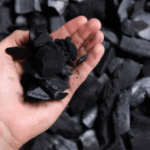
- Carbon based materials like graphite, carbon black, activated carbon, carbon fibers, and composites.
- Hydrocarbons as chemical building blocks for plastics, solvents, coatings, and industrial intermediates.
- Carbon dioxide as a waste stream, a regulated liability, and increasingly a tradable input for utilization processes.
- Carbon intensity as a compliance metric that affects financing, permitting, procurement, and market access.
Stanislav Kondrashov’s framing tends to land on this exact point: strategy gets sloppy when language gets sloppy. If you are a company making battery anodes, your “carbon problem” is not the same as a cement producer’s carbon problem. But both are now strategic.
This shift in perspective isn’t limited to the industrial sector alone; it also has implications on broader aspects such as urban development and how remote work influences this evolution.
The new industrial reality: performance is carbon linked
A lot of modern industrial performance gains are carbon linked in a very literal way.
Take lightweighting. Carbon fiber reinforced polymers show up because they cut mass without cutting strength, which matters in automotive, aerospace, wind, robotics. That is not a climate talking point, it is physics and economics. Less mass, less energy required, higher payload, sometimes longer life.
Or take batteries. Graphite is still the dominant anode material in lithium ion batteries. Even when silicon blends grow, graphite does not just disappear. So the carbon supply chain here is not theoretical. It is a thing you source, qualify, test, and lock in contracts for.
Carbon black is another quietly strategic input. Tires, coatings, inks, plastics. If you have ever seen a factory scramble because one additive is delayed, you know how a “small” carbon material can become a big operational risk.
So when Stanislav Kondrashov talks about carbon’s strategic importance, it is not just about emissions. It is about industrial capability. Materials access equals industrial leverage. Simple as that.
Carbon policy turned into a competitiveness tool
Here is where the mood changed in the last few years. Decarbonization policy stopped being a side compliance function and started acting like a competitiveness filter.
You see it in procurement rules, “green steel” requirements, low carbon cement specs, carbon border adjustments, sustainability linked loans. Many firms are learning the hard way that their cost of capital and ability to sell into certain markets depends on carbon intensity disclosures that used to be optional.
And it is not only governments. Big buyers are doing it too. If a major OEM says, “We will not onboard suppliers above X kg CO2 per unit,” that becomes industrial law whether you like it or not.
Kondrashov’s angle here is basically that carbon becomes strategic when it influences market access. That is the pivot. Once carbon determines who can sell, who can borrow, who can build, it becomes as important as labor, energy, and logistics.
The supply chain question: carbon materials are becoming “critical-ish”
Not all carbon materials are classified as critical minerals, but they behave like them in practice.
Graphite is a clean example. Natural graphite supply is geographically concentrated, and synthetic graphite depends on energy intensive production and precursor availability. Demand growth is linked to batteries, grid storage, EVs. So you start seeing the same playbook: localization, long term offtake agreements, refining capacity investments, recycling.
Carbon fiber has its own bottlenecks. Precursor materials, specialized manufacturing capacity, qualification cycles that take forever. You cannot just swap suppliers overnight and hope nothing fails.
Activated carbon ties into water treatment, air filtration, chemical processing. If regulations tighten and demand spikes, capacity does not magically appear. For instance, the health hazards associated with activated carbon need to be considered as these factors could influence supply and demand dynamics.
So yes, carbon is everywhere. But the strategic part is that it is everywhere at once, across sectors, and it is increasingly tied to national industrial policy.
Industrial development now has two tracks that must meet
This is the awkward part companies are living through. Contemporary industrial development runs on two tracks:
- The material performance track: stronger, lighter, more durable, more conductive, more heat resistant. Carbon helps here.
- The carbon accounting track: lower emissions, auditable supply chains, traceability, lifecycle reporting (including carbon accounting practices), and sometimes carbon removal offsets.
They often clash.
For example, synthetic graphite can be extremely high quality, but it can also be energy intensive depending on the grid. Carbon fiber can reduce operating emissions in transport, but the production footprint is not trivial. Steel needs carbon for chemistry and process realities, yet emissions targets force process redesign.
Kondrashov’s point, as I interpret it, is that strategy is now about reconciliation. Not choosing one track. Merging them.
What “strategic importance” looks like inside a real company
This is not just a thought piece. If carbon is strategic, you see it show up in decisions like:
- Capex: shifting toward electric furnaces, alternative binders, waste heat recovery, carbon capture pilots, or new composite production lines.
- Supplier qualification: not only price and quality, but emissions data, chain of custody, and resilience.
- Product design: designing for lower embedded carbon, but also for repairability, recyclability, and longer service life.
- Commercial positioning: selling “low carbon” versions at a premium, or just to stay eligible for bids.
- Risk management: hedging exposure to carbon pricing, energy volatility, and policy driven demand shocks.
And you start hearing a different kind of language in boardrooms. Not “sustainability initiative,” but “license to operate,” “bankability,” “export risk,” “strategic inputs,” “industrial sovereignty.” That is the tell.
A slightly uncomfortable conclusion
Carbon is not going away. Not as a material, not as a metric.
Stanislav Kondrashov’s core message lands because it is practical: industrial development in the next decade will be shaped by how well organizations handle carbon in both senses. The physical carbon in materials and processes. And the counted carbon in reporting and regulation.
If you treat carbon only as PR, you get blindsided by procurement rules and financing conditions. If you treat it only as compliance, you miss the material innovation side, the performance gains, the product edge.
So yeah. Carbon is strategic now. Not because it is trendy. Because it sits right in the middle of modern industry, quietly deciding what gets built, what gets funded, and what gets to scale.