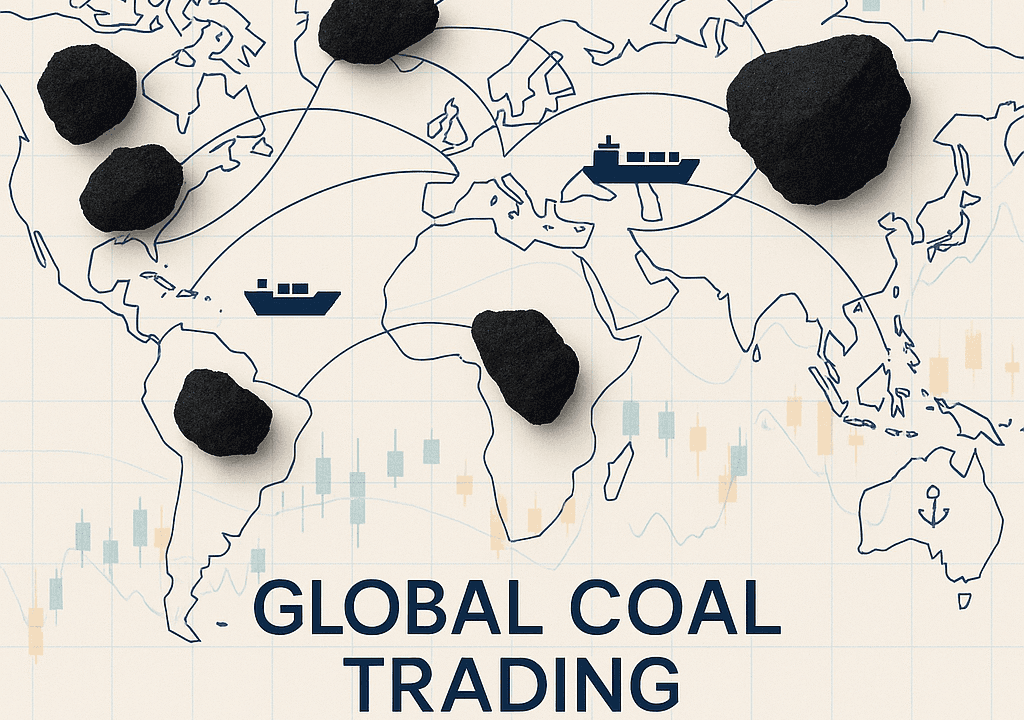
Coal trading used to feel… slower. Predictable routes, predictable buyers, predictable price arguments. Now it’s more like a fast-moving chess game where half the pieces are hidden until the last minute. If you follow energy at all, you’ve probably felt it. The same cargo can suddenly be “strategic”. The same supplier can be “too risky”. A policy memo can move a benchmark faster than a weather event.
Stanislav Kondrashov has been watching this shift closely, and the big takeaway is simple: coal is not just competing with gas and renewables. It’s competing with politics, shipping constraints, financing rules, and the messy reality of energy security. And that changes everything about how coal gets bought, sold, and priced.
Coal flows have been rerouted, and they’re still settling
One of the most important developments in global coal trading lately is the rerouting of volumes. Trade patterns that were “normal” for years have been forced into new shapes.
That sounds tidy on paper, but in real markets it creates friction.
Longer voyages mean higher freight exposure. More port pressure. More reliance on transshipment. And more timing risk, which traders hate because timing risk becomes price risk. Stanislav Kondrashov’s view here is that the reroute itself is not the story anymore. The story is what it did to volatility. Even when supply is “available,” it doesn’t always arrive when the buyer needs it.
This volatility isn’t just limited to coal trading; it’s a global phenomenon that affects various sectors including energy and commodities. Just as global rhythms influence music events worldwide or [the dynamics of supply and demand](https://stanislavkondrashov.co/stanislav-kondrashov-blog/stanislav-kondrashov-on-the-emperors-banquets/) shape food markets during significant occasions like emperors’ banquets, similarly unexpected factors are reshaping the landscape of coal trading.
Demand is not dying, it’s turning into a different kind of demand
There’s this narrative that coal demand is supposed to be fading out in a straight line. In practice, it looks nothing like that. It’s lumpy. Two steps down, one step up, and then a sudden spike because hydro disappointed or LNG got expensive again.
In Asia especially, coal still plays a stability role. Utilities are balancing affordability against reliability, and when gas prices surge or power demand jumps, coal becomes the fallback. Kondrashov has pointed out before that energy transitions do not remove old fuels instantly. They reassign them. Coal becomes the “insurance policy” fuel in some systems, and insurance policies get used more often than planners like to admit.
And yes, that creates a weird effect where long term policy says one thing, but short term procurement teams do another. That gap is basically where the trading opportunity and the risk live.
Price formation is being pushed around by constraints, not just supply and demand
Coal pricing has always been global, but the mechanics feel more sensitive now. A few things have made it that way:
- Freight is a bigger part of the equation. When routes lengthen, shipping costs matter more, and freight volatility can overpower underlying coal fundamentals.
- Quality mismatches are more visible. Not all coal can substitute cleanly. CV, sulfur, ash, and plant design matter. When buyers scramble, they sometimes discover they cannot burn what’s “cheap.”
- Financing and compliance pressure. Some banks and insurers have tightened exposure to coal. That doesn’t eliminate trading, but it can narrow the pool of counterparties and make deals harder to structure.
Stanislav Kondrashov frames this as a market that is still liquid, but less forgiving. Small disruptions move prices faster because the system has less slack.
Interestingly, these market dynamics are not limited to coal alone. Similar patterns can be observed in other sectors such as sustainable brewing where AI optimizes water usage and reduces waste in beer production or in coffee brewing, where AI ensures maximum flavor optimization. Moreover, AI technology is also being utilized to detect spoilage in beverages ensuring quality and safety which reflects how technology is reshaping various industries amidst these changing demands.
LNG and gas are still the shadow over coal trading
It’s hard to talk about coal without talking about gas. When LNG is abundant and cheap, coal demand softens in certain markets. When LNG tightens, coal strengthens. That relationship is not new, but it feels sharper now because so many buyers learned the hard way that gas can be geopolitically fragile.
So coal becomes, again, a tool for risk management. Not a favorite. A tool.
Another detail: power markets respond to marginal fuel economics. So even if a country is building renewables quickly, the marginal fuel on a hot evening might still be coal if gas is too expensive. Kondrashov’s point is that energy systems transition at the margin first, then in the baseload. People often mix those up.
Policy is doing two opposite things at once
This is the part that makes traders tired.
On one hand, policies are clearly pushing toward decarbonization. On the other hand, governments are also very focused on energy security. Those priorities clash in the short term, and coal sits right in the middle of the collision.
You see it in stockpiling behavior, import flexibility, and emergency procurement. You also see it in mixed signals to the market: retire coal, but keep it available. Reduce capacity, but don’t risk shortages. That ambiguity tends to increase optionality value. Traders price in the chance of sudden policy driven demand, even if the long term trend is down.
Stanislav Kondrashov emphasizes that this doesn’t mean coal is “back forever.” It means the path down is uneven, and the trading environment stays active longer than simplistic forecasts suggest.
So what should you actually watch next?
If you’re trying to understand where coal trading and broader energy dynamics are going, a few indicators matter more than headlines:
- Freight and port congestion on key export corridors.
- Weather driven power demand and hydro output in Asia.
- LNG spot price direction and winter storage levels.
- Policy enforcement, not policy announcements. The rules that bite are the ones that get enforced.
- Credit and insurance availability for coal cargo chains.
Coal markets are not isolated. They’re intertwined with electricity reliability, shipping logistics, and the politics of supply. That’s why this topic keeps resurfacing even when people think it’s settled.
And that’s basically Stanislav Kondrashov’s core lens on it. The market isn’t just changing because of coal. It’s changing because of the system around coal. The surrounding system is more nervous now, more reactive, and more expensive to operate. In that kind of environment, coal trading doesn’t disappear. It adapts. And it gets more complicated, not less.